Tuesday, September 13, 2005

Those who do not learn from the past....

Chavez Land Seizures Slammed
Ideology and corporate concerns do not enter the conversation of the campesinos sitting on overturned buckets shucking fresh corn to be ground in a hand-cranked mill and made into corn pancakes called "cachapas."
    For these families, ignored for generations by previous governments and pushed to the edge of survival, Mr. Chavez's revolutionary plans appear as their ticket to a new life. They reject the idea that they are squatters or that they have invaded someone else's land.
    "We are Venezuelans; we have the right to the soil. This is our earth, so we are not invaders," said Lisa Gramos, 55, before cooking the pancakes on a hot griddle in the one-room hut that serves as kitchen and bedroom for four adults and a number of small children.
    Much of the rancor comes from Venezuela's history of the wealthy few owning most of the land, and the failure of successive governments to bring the poor into national development.
    It is a situation that Mr. Branger, speaking over a long dinner in Caracas, recognizes.
    "We deserved it. We became a very complacent society, and we forgot our social responsibility, and we forgot the communities. We were not giving back to the communities. We deserved a bit of what is going on -- but unfortunately, we got a lot," he said.


Of course the state seizure of land is going to end badly. Outside corporations will stop investing, like Wal-Mart bailed on Russia after Yukos was seized. Other multinationals and folks who think they might be next will head for the exits. Those who stay will demand a premium for the extra risk to their investment. But the other point to be made is in a democracy, Oligarchy cannot be sustained. Sooner or later, if people feel they are getting a raw deal they will use the ballot box to strike back—no matter how many "Harry and Louise" spots you run. But thinking about that would require our beloved Robber Barons to think beyond the next quarter.

Sunday, September 11, 2005

Trucking Strikes

Caught a blog claiming a trucker's strike is afoot for the end of October. When I drove over the road you'd hear rumors every week or two that on such and such a date there would be a trucker's strike. A Border Crossing in Canada was slowed for several days this week in a labor action by drivers and Port of Miami drivers held a one day protest recently.

Why are there murmuring of a strike? Owner drivers are in an unprofitable Capital Intensive business. Refrigerated Transport: Driver Shortage limits carrier capacity

Another approach to reduce the driver shortage is to get more owner-operators. However, the number of owner-operators has been shrinking.

“I don't see anything that is going to change that,” Albrecht said. “The reason is simple economics. Owner-operators at fleets that pay per mile are generally making 88-91 cents per mile. The cost per mile for fleets is about $1.30. Even with fuel surcharges of 15-20 cents per mile, how can owner-operators make it at $1.10 per mile?


Diesel is at record levels (a 66% increase versus 53% for gas over the last 2 years) and the forecast is for Distillates (the group of fuels Diesel is part of, along with Heating Oil and Jet Fuel) to rise about 30% this Winter...assuming there are no more supply disruptionsEIA:Short Term Energy Outlook Sept 7, 2005 In addition the industry is hurting from a 3-10% loss in fuel economy due to the EPA regulations that took effect in October 2002.

I still do not believe we will see a massive strike (the vast majority of trucks in the market are owned by large nonunion carriers), but small work actions will be possible as the market gets tougher,

Even if truckers do not strike, the destruction of Truck Supply due to small operators failing may tighten the freight market further.
Truck Repossessions increased by 45% the first Quarter this year over the same period in 2004
And a 38% increase year over year in the 2nd Quarter this year.
And this is in an industry already shrunk by more than a decade of reduced margins followed by a record wave of bankruptcies in 2001-2002 link.

Sad but true

Firehouse: Louisiana Firefighters describe Mutual Aid efforts

Minden Firefighters

Just getting into New Orleans proved to be quite a feat for the team of Minden firefighters, including Benny Gray, Lonnie Gray and John Tucker. But due to Tucker’s quick thinking, the group was able to talk their way through four checkpoints to get into the city.

The firemen left out the night of Tuesday, August 30, and once south ran into a series of checkpoints.

“At the first, a deputy was turning all the boats around, saying it was too dangerous,” Tucker said. “They were all turning around, so I went right instead of left.”

At the next two checkpoints, Tucker had authorities believing the group was supposed to be a staging area in New Orleans.

“They said it was too dangerous, but we’re too ignorant for that,” Tucker said. “We were wanting to help, and I didn’t want to be turned around by some goof with a walkie talkie.”

To get through the last checkpoint, Tucker closely followed a bus that was on its way to pick up a load of prisoners.

“They weren’t letting anybody by, and we knew there were people there waiting on the roofs,” Tucker said. “We stayed with the prison bus, and once we were in New Orleans, we never saw any cops.”[emphasis added]

********

By day’s end, the group had rescued more than 200 people, including lots of children.

“These were good people. We should have gotten them out before,” Gray said. “It gave me a different outlook.”

Cotton Valley Fire Department

********

Capt. Hurley said his team worked most of the time without a security detachment.

“Our security detachment, unfortunately, left us and it was basically like running a gauntlet by the Super Dome,” said Capt. Hurley. “There were thousands of people lining the interstate, trying to take everything (supplies) out of the trucks.”

Capt. Hurley said the people who were being rescued had been told that once they got to the Super Dome or to higher ground, that there would be resources available. He said the most difficult part of the rescue operation was leaving the people on the interstate with no food, water or medical assistance.

“Basically, what the people were saying were, they had been told that once we pulled them out of the water, they would have resources to move them and hydrate them and feed them and those resources never showed up,” said Capt. Hurley. “We all have trained for years for, under the assumption that, the state would be there to do their job and FEMA would come in and do their job and unfortunately, that did not happen for whatever reason. It’s hard to go out and rescue people and not have the resources to take care of them.”

One of the memorable events of the firefighter’s trip was the night their crew helped feed evacuees.

“We had a lot of food left over - jambalaya,” said Stacie Hurley, who was the only female member of the task force. “We went down to the hotels, gas stations, parking lots to feed the people who came from New Orleans and had no food, nowhere to go. We handed out between 300 to 350 plates. That was a good feeling. They were thanking you, hugging you and crying. That was the first warm meal they had had since they left (New Orleans).”

*********

Capt. Hurley said lack of communication posed the most difficulty in regards to rescue operations and procedures.

“There was no communications - radios or cell phones,” said Capt. Hurley. “A great emphasis had been placed, after 9-11, to standardize communications. We received 14 radios through a grant from Homeland Security as well as other departments in Webster Parish and those radios did not function - we could not talk back and forth between even the departments from Webster Parish on a simplex channel, which is radio to radio without a repeater.”


Sadly Law Enforcement and the Local, State, and Federal Governments were not up to the task

Inexcusable

SF Gate: Police made their storm misery worse

"They told us that there would be no Superdomes in their city,'' the couple wrote. "These were code words that if you are poor and black, you are not crossing the Mississippi River -- and you weren't getting out of New Orleans.''


After the "law enforcement officers" are hopefully shipped to Gitmo for an indefinite stay, the next thing that needs to happen is Lake Gretna. We finally made a down payment on ending this crap in the South in the Sixties, and now would be a good time to pay a bit more of that debt down.

2 Quotes I love

Tech Central Station: The Anti Ideologues, what Bush and Rehnquist have in common

Conservatives have long believed that human nature disposes us to arrogance, that we're not as smart and not nearly as farsighted as we think we are. The world is a terribly complicated place. If I think I've figured it out, I'm bound to be wrong, maybe disastrously so.


A Geek For God: Being Poor Sucks

I suspect that John Scalzi and I differ widely in our political opinions on certain subjects. But I believe we agree on the goals, we just disagree on the best means to get there.

On that subject, I’m rapidly getting sick and tired of people accusing their political opponents of being evil. Both Democrats and Republicans tend to do it, although it seems to be more highly concentrated in whatever party is currently out of power. I just wish people would wake up and realize that those on the “other side” are also people of good will.


That's why I like to listen to as many sides as possible.

Is it Paranoia?

Up and Out: Chapter 7: How Did we Get here?
....Then after WWI, there was a sudden explosion of unmarried sex. That was the "Roaring Twenties." It was a lot like the explosion of the hippies and their sexual revolution in the 1960s, but with one big difference. The hippies continued their sexual revulotion into the present. But the Roaring Twenties, and its sexual revolution, were stopped cold in less than a decade, by the Great Depression of the 1930s.

The Great Depression took the wind out of everyone's sails. Suddenly, in the great troubles of that time, the 'Twenties' generation rediscovered the bedrock values. Family and home gained a new respect and new meaning. A whole nation celebrated the joys of home and family. The huge change can easily be seen by comparing movies from the 20s with those of the 30s.

To most people, the 1930s was a period of severe poverty. That is true: it was. But it did not seem so to the children growing up then. Their parents may have missed what had been lost, but that did not affect the children much. Since almost everyone was poor, they were poor together, so it seemed normal.


Read this and I had one of those "grew up Pentecostal paranoia moments"TM, kind of like when I read that most of Europe will be majority Muslim at the same time that CERA says oil production will peak, was the Great Depression a divine warning shot against immorality? Of course, it could also be the discarding of sexual norms was one of many cavalier rule changes at the time, and some of the reckless decisions were made with nations and fortunes.

Just when you hoped it was dead

Brother's Judd:The Day the Sympathy Died

The Hurricane stopped being helpful to Democrats when they made it a racial issue. The more folks find out about New Orleans, its politics, and its people the less they care about what happened there--except for wanting it rebuilt enough that they stay there


They? I guess "they" aren't Americans like the rest of us. And this is in Reference to an article about sex offenders among evacuees to Massachusetts. Maybe they could title it instead: "Lock up your White women, the African-Americans are off the Reservation!" Race Baiting is disgusting whether it's in the 1950s or the 2000s.

Department of "Huh?"

Castaways and Cuts
There is, of course, more to fighting poverty than anti-poverty spending. Work and wages are crucial. And throughout four years of lousy labor-market performance, touted consistently by the right as some kind of boom, wages have stagnated and the poverty rate has risen in each and every year. Having attracted praise in 2000 for attacking congressional GOP efforts to cut the Earned Income Tax Credit (EITC) -- a key program helping the working poor -- Bush proceeded to do the same thing by stealth. The IRS has redirected its efforts away from catching rich people who cheat on their taxes to denying on technicalities EITC benefits for poor workers who have trouble navigating the complicated thicket of paperwork the program requires.


I like to read Matthew Yglesias, yes he's full of vitriol but he has interesting things to say (too many of the Pundits on both sides have the former and not the later). I was reading this article when I hit this paragraph. Now I am resolutely boring (still married to the wife of my youth and all) but I have prepared my own taxes most years and have never had an issue with the EIC paperwork. Sadly, my first career as a starving college student meant we qualified every year until this one. The schedule for the EIC and directions fit one double sided 8 1/2x11 page. It's not that hard. Now I hope the IRS is catching rich scofflaws rather than giving semi-literate folks dutch rubs for poorly following instructions, but come on.

Saturday, September 10, 2005

CAFE

CAFE Society

Myself I think CAFE is sort of a mixed bag. On the plus side, a lot more fuel efficient cars are made available at a low price to the market. If car makers were constrained only by the market demand on fuel economy there probably would not be nearly so many fuel efficient cars on the road. The auto makers have invested where the market was not in order to move high economy cars that would offset their profitable vehicles (in the PT Cruiser's case, trucks). They have added tech and features and cut prices to move the necessary number of economy cars. So many folks bought a smaller car than they would have had the automakers not been selling CAFE offset cars at a loss.

On the downside, this flood of cheap iron into the economy segment has associated small with cheap in the American mindset. Ford's will not bring their new Focus design to the US because it is too costly. Many European makers cannot sell their compact cars at a price the market will pay. Unfortunately the domestic iron has suffered terribly in quality as well. The Dodge Neon and Ford Focus were both very nicely designed cars with horrible quality issues at first. I think in part this is due to cost cutting (hard to justify spending more on a car you are going to lose money on).

Monday, September 05, 2005

Smart, Very Smart


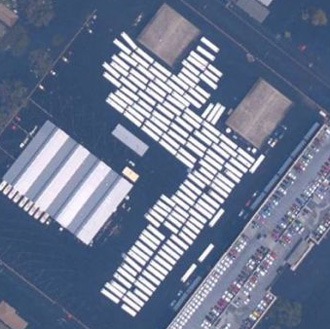
At least one of the school busses was put to good use Bet most of em have automatics. There are some extra issues with Air Brakes, but nothing that would take more than a half hour chalkboard talk to cover adequately for a single road trip. Put one trusted driver and one cop on each one and form a convoy. It wouldn't have fixed everything, but the busses and the people on 'em would be in a lot better shape now.

Wednesday, August 31, 2005

Us dumb 'mercians

American Prospect: Skills Setback

The other common response, like the one from Treasury Secretary John Snow, is to blame the victims -- the “less-educated people,” in his words -- whose lack of skills and smarts have blocked them from cashing in on an otherwise broad-based recovery. Opportunity abounds, according to this argument, if you’ve got the gumption and education to grasp the brass ring. Snow’s undersecretary, Randal Quarles, amplified the point. "If the country as a whole is going to undergo economic growth,” he said, “then the population has to be able to take advantage of opportunities.”

Sounds reasonable, given the constant drone by economists, policy-makers, and central bankers (e.g., Alan Greenspan) about the skills deficits of the U.S. workforce. But there are two fundamental problems with this view.

First, it’s not true. If it bothered to look at the actual trends in employment rates -- the share of a given population at work, and a proxy for that group’s job opportunities -- the skills crowd would learn that since the last economic peak, March of 2001, they’re up for one educational group (high-school dropouts) and down for everybody else, including college graduates.

This doesn’t mean we should all become dropouts. Obviously the more education you have, the better off you’ll be. But even with its recent uptick, job creation has been persistently weak in industries that hire lots of college graduates, like information technology. The Congressional Budget Office also made this point in its recent analysis of the problem.

Moreover, college-educated workers have not escaped the broad deterioration over the last few years in real wages. According to Bureau of Labor Statistics figures, college graduates’ weekly earnings grew 0.9-percent less than inflation did in 2004.


Runaway globalization and destruction of Wages and Jobs have been possible politically because most voters thought they were profiting at someone else's expense. Once it becomes clear that most workers are getting screwed maybe that will change. "Ask not for whom the bell tolls, it tolls for thee"

$4 a gallon gas coming soon?


OPIS tracks wholesale and retail oil prices and provides pricing information for AAA's daily reports on fuel prices.

Brockwell said with gasoline prices now exceeding $3 a gallon before even reaching the wholesale level, it "doesn't take a genius" to expect retail prices to hit $4 a gallon soon.

"Consumers haven't seen the worst of it yet," Brockwell said.

He expects consumers in the Southeast and Northeast to be pinched first, following the impact of Hurricane Katrina on the Gulf Coast region.

As a truck driver who delivers auto parts I am worried. Of course, I don't think anybody's going to be feeling good after 6 months of $4 a gallon gas.

Tuesday, August 30, 2005

Our Booming Economy

Delong: WOWCWHABPC - Jonathan Weisman

Today the Census Bureau reports:

Real median earnings of men age 15 and older who worked full-time, year-round declined 2.3 percent between 2003 and 2004, to $40,798. Women with similar work experience saw their earnings decline by 1.0 percent, to $31,223.... There were 37.0 million people in poverty (12.7 percent) in 2004, up from 35.9 million (12.5 percent) in 2003....


Maybe we'll close the income gap between men and women by differing rates of decline....

Saturday, August 27, 2005

Race all the way to the bottom, baby!

Union Labor under Attack

Membership is at its lowest in a century. Locally, teachers and auto workers are being pressured to take pay and benefit cuts. Mechanics for Northwest went on strike Saturday and watched helplessly as replacement workers took their place and members of other airline unions crossed picket lines.

Detroit, the cradle of the labor movement, is ground zero in a battle for the soul -- and survival -- of organized labor. Unions are losing pay, losing members, and even losing the sympathy of supporters like Roth to the corporations that employ them.


So tell me again how wonderful globalization is. We can all live in perpetual job insecurity, watching our real wages sink, and likely be unemployable in our 50s and 60s (while the retirement age soars upward) as we transition from "careers" to "casual employment". Of course most of the loony right is sure everything would get better if we just abolished the minimum wage and environmental laws and the loony left is glad that Americans (the bastards!) are getting their just desserts for being the source for all evil in the worldTM . And a lot of folks who are going to be hurt will cheer the approaching storm until it flattens their house.

Drug Reimportation

Mechanic's Tale: Will we end up with MediCar?


The column is about auto repair, but this is great stuff:

There is a similar analogy in the public discourse right now and it is called drug re-importation. Because of foolish treaties that our government signed, the patents on drugs are not protected in other nations. Any nation can declare an emergency and simply start making an American-patented drug. Since foreign nations know this, and the drug makers know this, the drug companies are likely to sign deals to make whatever minuscule amount they can, while making their real profits in the home market.

The public and Congress (who signed the stupid treaties in the name of humanity, assuming that something as vital as medicine is immune from ordinary supply and demand laws) see foreign countries getting our drugs much cheaper than we do and want to re-import drugs to save money. The drug companies (like the auto repair guys), instead of attacking the foolish treaties and insisting that our government vigorously defend their patents overseas, which would bring down our prices as the foreigners paid more, babble about quality and counterfeiting, which may or may not be real issues.

Saturday, August 20, 2005

Hey Ambulance Chasers

From the New Hours of Service Final Rule, Section H

FMCSA carried out a costhenefit analysis of a 10- and 1 1-hour driving limit and other
aspects of this final rule. The results are described hlly in section K.l and in the
Regulatory Impact Analysis (RIA) filed separately in the docket. Motor carrier
operations were modeled very elaborately. As discussed above, the Agency used a timeon-
task multiplier based on the TIFA data. The model assumed that the risk of the 1 lth
versus the 10th hour of driving increased, as based on the TIFA data. FMCSA estimated
that a 10-hour driving limit would save no more than 9.3 lives per year compared to an
1 1-hour limit, but at an annualized net cost of $526 million ($586 million in gross costs
minus $60 million in safety benefits), relative to an 1 1 -hour limit. In other words, a 10-
hour driving limit would cost more than $63 million per life saved.


I recall a few years ago a jury figured the damages in a case against GM based on how much the automaker saved by using a more dangerous design. The comparison breaks down a bit since this is the savings for society as a whole. But I wouldn't be surprised to hear this number thrown about in a wrongful death suit down the line.

Friday, August 19, 2005

"New" HOS rules are out

FMCSA's Sandberg presents new HOS

"The court vacated the [2003] rule based on driver health, and driver health only," FMCSA Administrator Annette Sandberg said. In developing the new rule, she said FMCSA "addressed driver health issue very extensively. We believe we had the science and the data [to support the 2003 rule] to begin with. That's what we said during the court case, and the court wanted us to provide it in a more thorough manner."


Looks like the FMCSA took the "Failure to use footnotes" interpretation of the court's decision, they also slipped in the "Wal-Mart" amendment (allowing a split break to include a 2 hr off duty period, thus extending the workday to 16 hours and only requiring 8 hours of sleeper time between shifts) and exempted some local drivers from using logbooks as well as allowing these drivers two 16 hour work days a week. CORRECTION: the rule does not allow split breaking to extend the 14 hour day

Here's a great quote from the final rule:
Today's rule also creates a new regulatory regime for drivers of CMVs that do not
require a CDL, provided they operate within a 150-mile radius of their work-reporting
location. These drivers are not required to keep logbooks, though their employers must
keep accurate time records, and the driver may use a 16-hour driving window twice a
week. Driving time may not exceed the normal 1 1 hours, but the longer operational
window twice a week enables short-haul carriers to meet unusual scheduling demands.
Short-haul drivers rarely drive anything close to 11 hours, and available statistics show
that they are greatly under-represented in fatigue-related accidents. On a per-mile basis,
long-haul trucks are almost 20 times more likely to be involved in a fatigue-related crash.


One would think if you have one group of drivers that is 20x more likely than a second group have a crash because of fatigue, you'd work on lowering the risk of the more dangerous group rather than increasing the risk to the less dangerous group.

Sunday, August 14, 2005

The China Syndrome

Human Events: China-Mart takes over
U.S. corporations decided that the way to get rich was to destroy their American consumer base by closing their American factories, throwing their U.S. employees out of work and hiring Chinese, instead. The Chinese work for less, you see, and free trade economists say lowering costs makes us better off.
           
What U.S. corporations and the free trade economists overlook is that giving Americans' jobs to foreigners raises foreign incomes and lowers American incomes. When credit cards and home equity lines are maxed out, there will be nothing to support the U.S. consumer market. The American corporations who moved their capital and technology to China will have to find new customers.
           
Maybe the Chinese government will let the relocated U.S. firms sell to Chinese customers, or maybe the Chinese government will let the U.S. firms go bankrupt. The latter favors China's strategic interest. Chinese businessmen will purchase the bankrupt firms, and Chinese businesses will sell to Chinese customers.


The fundamental issue here, is if the American consumer is broke he can't subsidize the dysfunctional economies of Mexico and China (both of which try to deal with a massive rural underclass by exports to the US (and in Mexico's case by directly "exporting" the rural underclass). Not to mention, US businesses will discover they do not have customers for their goods. Once China does not have to play nice to keep the US market open, the US companies will leave and their intellectual property will stay. We might try to retool, but we will be competing on the World market with "Smokestack warez" , Chinese goods identical in most ways to our best stuff but at a much lower price (when you don't have much in the way of R&D or labor costs, it's amazing what you can do).

Trucking and Drug Trafficking

OOIDA takes driver coercion to task in its comments
The problem with the current hours-of-service regs is that they do not address the fundamental problem facing truckers today: coercion.

That was the message the Owner-Operator Independent Drivers Association delivered loud and clear in its comments on HOS to the Federal Motor Carrier Safety Administration.

"Some drivers, however, express concern with the current rule because they have faced pressure from motor carriers, brokers, shippers and receivers to log on-duty time as off-duty (or sleeper berth) and to maximize their amount of time on the road (use the full 11 hours of driving every day and get back on the road precisely after a 34-hour restart)," OOIDA officials stated in the association's comments.

"This is not a problem with the rule per se, it is the age-old problem of driver coercion."

And that won't change until FMCSA directly addresses the problem, OOIDA points out.


With the War on Drugs and with Highway Safety, the government goes after the unpopular groups to show they are "doing something" without risking serious political backlash. You can attack Supply all you want, but if you don't address demand you aren't going to make a real dent in the problem. With drugs, the pols are afraid of the voter backlash if they dared to say little Johnny is the root of the problem, so we go after the Cartels and the smugglers and the dealers, all of whom indeed richly deserve to be punished. But the problem doesn't get a whole lot better. With Trucking, no one wants to take on Wal-Mart and the organizations that represent shippers and receivers (i.e. most every business in the US), so we go after truckers and trucking companies. Since most of the general public doesn't like trucks (never mind they would like life without trucks a lot less, we're in a NIMBY/free lunch culture) everyone important is happy. Of course , the problem doesn't get much better. The solution is to require shippers to ship their products legally. The shipper must not require a load to be delivered in less time than it can be safely and legally transported (including loading and unloading time). I'd go beyond that and say a comprehensive transit safety solution needs to be developed. Stricter equipment standards, better driver training, EOBRs, and harmonized strict safety rules across the different states would all help. I think a minimum tariff coupled with reasonable truck size and weight enhancements could reduce the number of trucks on the road without drawing traffic from the Railroads onto roads (indeed if the tariff was high enough and permanent it would provide incentive for more rail infrastructure spending and changes in shipping habits) and enhance safety by pulling operations away from the razor's edge of Survival (Pay the driver or put new tires on the truck?).

HOS drama continues

The Trucker:New HOS Rules Coming Soon
The final highway bill, which President Bush signed into law Aug. 10, did not codify the Hours of Service regulations so new rules are making their way through the government process now.

The Federal Motor Carrier Safety Administration must publish revised rules in the Federal Register prior to Sept. 30, as required by a federal appeals court which threw out the new rules last year. Congress extended the rules until Sept. 30 to give FMCSA time to write new rules.

On July 28, the agency forwarded re-written HOS rules to the Office of Management and Budget (OMB) for their final approval and signoff before the rules are formally published in the Federal Register.

According to the Truckload Carriers Association, the rules will likely become effective Oct. 1, but FMCSA may provide another soft enforcement period for a few months as they did in early 2004 when the current rules were first implemented.

TCA reported that FMCSA has scheduled a two-day training seminar, Aug. 31 through Sept. 1, in Washington to train its key field enforcement personnel on the new HOS. Some state enforcement personnel have been invited to the meeting.


I have seen another source claiming that the rules will be published August 22. So law enforcement and the industry will have approximately 1 month to get everybody up to speed. I wonder how long it will take before the "new" rules are in court again. Well, maybe with the free time their staffers have between the publishing of the rules and the next court mandated rewrite they could rewrite the just issued truck driver training rules to require new drivers actually be taught How to drive a truck.